Showing posts with label exhibition. Show all posts

Saturday, 15 November 2014

Needle in a Haystack


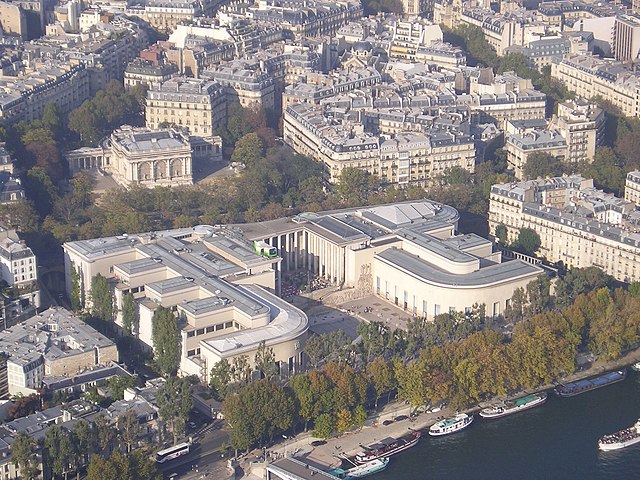
A simple sewing needle made big news in Europe this week. Besides hitting the papers, this needle featured in prime time, international TV broadcasts too. What made an ordinary stitching implement so special?  Location, location, location, my friend.   The needle was on show, so to speak, at the Palais de Tokyo , Paris’ Museum of Contemporary Art. It was hidden in a not-so-proverbial haystack.  Italian performance artists Sven Sachsalber had just 48 hours to find it. 

 
Irish Haystacks by Johnathan Wilkins (c) Creative Commons


What’s the point of this needle? The Museum’s director Jean de Loisy explained the exhibit this way: ''It is a symbol of the search we are all doing for something.''   Honest, he really said that.

I’m gob smacked.  Here is a museum director who understands a needle’s role the process of discovering ourselves. He sees the artist’s search and experience very important.   Hooray for that. But the embroiderer in me is incensed. The director breezes over embroidery. It’s the process of discovery that is so important to him. 

 A needle is indispensable to those of us who explore the creative process – and discover ourselves--through the needle arts.   But hang on; needles shouldn’t have any thread in them.  That would leave a trace of the effort that many of us have expended during our quest of discovery. The quest and product would be embroidery and definitely not comme il faut. 

 I am delighted that the museum director gets that needles are associated with doing something time consuming (thus life consuming), but hay—oops hey-- this is ridiculous.  

A search for something concrete, like a needle in a haystack, is art when it is performed by a young handsome man devoting two days of his life to it in front of on lookers.  (Let’s hope that his time is paid for.)  The private process of embroidery, or even its concrete product, is not worth the time of the art establishment despite the thought and technical skill that embroiderers put into them.  Why?  You tell me.
Palais de Tokyo in Paris by Strobilomyces

  And the questions keep coming. Why haven’t hundreds of thousands of embroiderers worldwide produced artistic superstars worth shows in the galleries of the art establishment? Statistically there must be fantastic contemporary embroiderers out there. Surely finding them must be worth the effort of finding a needle in a haystack.  And much more interesting, I would say.
One adjudicator of modern taste the MOMA, Museum of Modern Art in New York, has an ongoing workshop exploring modern gas masks and embroidery. It’s performance based, vanishing at the end of the day. A search of the Palais de Tokyo website –not the haystack--unearthed a previous exhibition featuring embroidery as fashion embellishment.  Embroidery is clearly not the main event. And New York’s Metropolitan Museum of Art did a show on textile history. That’s about as good as it gets fans. The Museum of Craft and Design has a collection of modern embroideries but you can’t search their site! 

After years of pondering these questions as I stitch away trying to understand  the world, the answer appearing out of the mist seems to be that much embroidery—not all—is made by women.  And that’s the rub, impediment, explanation, whatever you want to call it.  Amanda Vickery explored the lot of female painters through the centuries in a brilliant BBC series.  The programs got a wonderful review in the Guardian.  A quick look at the comments from enthusiastic female readers shows there is a broader understanding of sexism and feminism a foot.  So if you see embroidery as that subset of art primarily practiced by women, often older women, how can the lack societal interest be anything else than it is:  Benign neglect. 

Because embroiderers understand this condition doesn’t imply we accept it. There are many more urgent existential problems facing women that deserve society’s attention and resources. We don’t make a fuss. Still that doesn’t mean that embroiderers shouldn’t call attention to sexism and ageism. Nor should we shrink from the opportunity to needle the art establishment or to prick their consciences. It just might set someone of them searching the haystacks of their souls.

Friday, 28 February 2014

Boetti Bonanza


As the world’s sportsmen (and women) vied for Olympic medals in Sochi earlier this month, needlework was also going for gold in London.  Christie’s, the  auction house, organized “Eyes Wide Open”, an exhibition, then sale, of  works by 14 Italian artists from the Arte Povera (“Poor Art”) movement  from the 1960/70s. The “poor”, in Arte Povera, alludes to the mundane materials that the artists adopted: plastic, ballpoint pens, blankets, and needle and thread. 

Among the 38 items Christie’s auctioned were three embroidered panels attributed to Alighiero Boetti, but stitched by Afghangan women in the 1970s.  Sorry no pictures available, but you can click through to see them.
  

  •      Addition   realized £1,706,500 or $2.8 M
  •      Subtraction  realized £1,538,500 or $1.8 
  •     Mappa   realized  £866500 or $1.4M

As amazing as these prices are, they did not set a world record for a Boetti’s embroidery. Another in his series of maps, or Mappa, sold in June 2010, for £1,833,250. Incidentally, the prices do not include the auction house commission and the royalty due the Boetti foundation. How much?  Think in terms of another 20-30%, perhaps, plus value added tax. That is mind boggling.

Beyond aesthetic and technique, what draws me to Boetti’s (1940-1994) embroideries is their ability to elevate the craft of stitching into an art form which is recognized in our life time.  

Boetti’s works offer an insight into the contemporary relationship between artist – the person with the idea-- and the artisan –the fabricator. These are two separate talents that come together in a single piece. Neither can do without the other to the same effect.

In Boetti’s case, concept is not synonymous with “design”.  Ultimately, he had hundreds of embroiderers working on his commissions. Sometimes, he did not offer them precise instructions. One instance of Mappa appears on a pink sea, because the Afghan embroiderers had a large supply of rose colored wool.  Boetti seems to have liked the effect. Over time, he left gaps in his drawings on linen to give the embroiderers the opportunity to incorporate their own ideas. They obliged him with verses in Arabic script. Boetti could not predict the ultimate outcome of his pieces, but his concept, i.e. unpredictability, remained intact. So “perfect” stitching is not the same as “interesting” embroidery, or even art embroidery.  I must remember that!

I am not sure that I comprehend why Boetti’s works command such high prices, four times what the experts estimated.  This is the mystic of the art world. Many are called, few are chosen. But that contemporary works in thread are right up there in value with those painted on canvases has to be good for promoting embroidery among a wider public, who follows trendsetters.  Put another way, perhaps it is more appropriate to say, that the clamor for the Boetti embroideries subverts the notion that needlework is valuable (or worthy) only if it is a couple of centuries old.   Hooray for that.  

I am irked by embroidery’s designation as “textile art”. This smacks of separatism, as if embroidery, as a means of expression, doesn’t belong among art’s mainstream techniques. That it, somehow, can’t cut it. While researching Boetti, I was delighted to discover that the Museum of Modern Art in New York, which owns a number of Boetti embroideries, has cataloged them as paintings.  Now that’s an achievement worth a couple of million pounds/dollars, don’t you think?

Wednesday, 22 January 2014

Gu Embroidery


Gu is not a word I associated with needlework. A sticky chocolate pudding came more to mind.

That is telling. It betrays how little I knew about China’s embroidery tradition.  But that is now rectified after a visit to MING, an exhibition which brought to Amsterdam’s Nieuwe Kerk the treasures of a dynasty, which ruled China between 1368 and 1644. 

Exhibition Poster: Ming
 The exhibition focuses on the commercial fortunes of China and the Netherlands, which became entwined during the Ming period. 

This was the era when the Dutch monopolized trade in lustrous Chinese porcelain, intricate carvings, and silk from the Middle Kingdom. It is the epoch that made the Netherlands rich and able to support its own talents, like Rembrandt van Rijn (1606-1669). 

 Tucked away in dark alcoves of the Gothic Nieuwe Kerk, itself dating to 1408, were four embroideries attributed to women from the Gu Family of Shanghai.  I almost missed them.  The stitching was so fine that in the gloom, protecting them from light damage, I mistook the embroideries for pen and ink drawings on paper. 

And indeed, according to the museum notes, this Gu style of embroideries “came to be accepted alongside calligraphy and painting as an art form in the artist scholar tradition”.  I could see why.

As works in thread they are themselves remarkable technical achievements. Never mind that they mimic pen and ink almost perfectly.

Gu Embroidery Eagle


 “Serene” describes them best.  The colours are dull. Has the silk thread lost its lustre, after all the pieces are well over 450 years old?  Or was the finish intentionally matted?  Perhaps it was the poor lighting or distortion by thick, protective glass.   

The stitching, in a few strands of silk filament, is superb.  Areas are filled in the long/short stitch I have come to love.   Simple in concept, the technique is difficult to execute well.  Stitches of varying lengths are laid alongside one another to cover a surface.

Detail of Bird Embroidery
 The stitching making up the bird’s tail feathers  is perfectly vertical. Yet it creates the illusion of feathers growing at an angle.  I know perfection when I see it.
 
Horizontal lines on another work were unflinchingly straight.  On the pine tree, the bark stitching was again horizontal, but curving ever so slightly to create gnarls. Did I see ink lines too or were those single fibres?  It was hard to tell in the dim light.
Pine tree with horizontal and curved stitching

Back at home Google dredged some additional background.  Here is the gist of it.

Maio Ruijan, the name of the originator of the Gu style, has survived the centuries thanks to an album of work she signed.  At last, I had the name for the founding guru of my favourite stitching technique.  

She lived in the household of Gu Mingshi, a high-ranking imperial administrator, as concubine to his eldest son.  She based her work on classical paintings from the Song (960-1279) and Yuan (1279-1368) periods. 

 Han Ximeng, concubine to Gu Mingshi's second grandson, improved upon the tradition and is considered a “needle saint.”   

 The work of these two women forms the foundation of Gu embroidery from which other Chinese embroidery styles evolved.

This information pleases me. The women are given their artistic due, even if their work is known by the name of the male head of their household. Still we must give the Gu men credit too. If they had not encouraged the women and shown their work to high-ranking male friends, we would not know if it today. Folios of Gu work are now held in the Forbidden City.

The women copied classical themes. Mimicry was not an obstacle to artistic merit, perhaps because of the technical innovation the stitchers brought to bear.  This is more problematic for contemporary western embroiderers.

The Gu embroiderers gave up the “encroaching satin stitch” in favor of new techniques, the varying long/short stitch and the “hairy stitch.”  Moreover, they created subtleties in line width by altering the number of silk strands in their needles. 

The women discovered subtleties in surface color could be achieved by simply changing the direction of silk in their needles. They used minute tone variations in silk to make transitions. 
And indeed, they worked in multi-media. Painting and embroidery were combined. So maybe I did see ink after all.  Scholars sometimes find it difficult to tell which is which, hence the term “needlepainting”.

In my attic I am stitching in the style Maio Ruijan started, a style which has gone right around the world.  But I have no illusions. The single strand of DMC cotton I use in my portraits looks like rope compared to Maio Ruijan’s few silk filaments. 

There is one more group of unsung masters in all of this: the needle makers.  You can't do fine embroidery without fine needles. Who made the ultra-fine needles the Gu ladies used? How did they form the tiny eyes on those needles? Just when I've unravelled one mystery, up pops another.